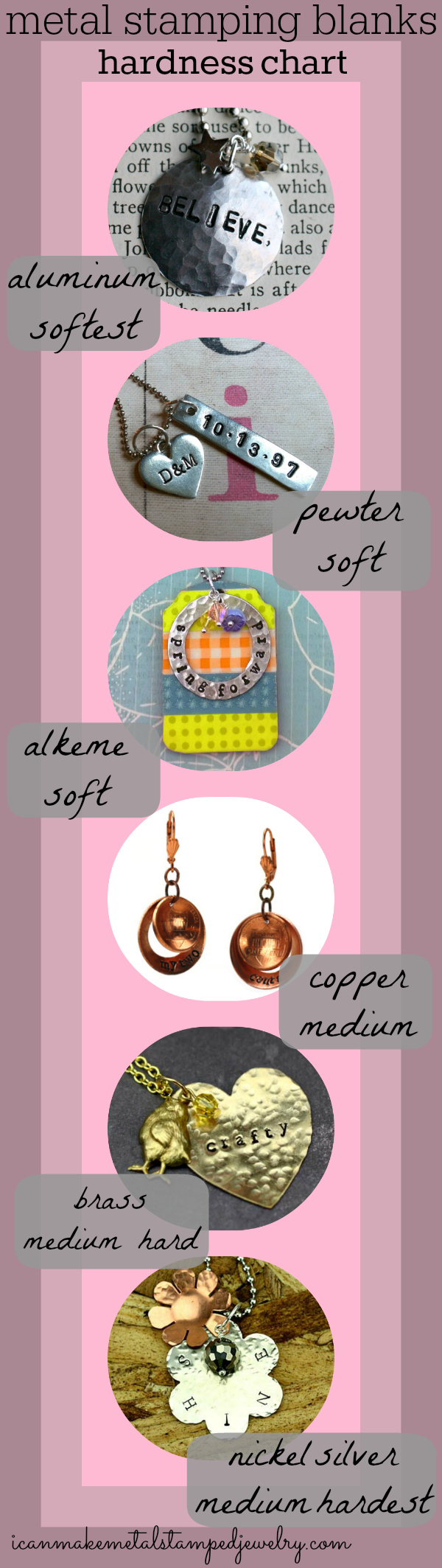
When you’re first starting out with metal stamping, figuring out *what materials you need can be the hardest part. There are so many kinds of stamping blanks out there! Until you get the hang of stamping, we suggest you start with a softer and more affordable stamping surface. Then, as you become more confident, you can stamp into harder metals with better results. We’ve made this metal stamping blanks hardness chart to help you decide which material best suits your needs.
If you’re just getting started, we recommend Aluminum. It’s very soft, inexpensive and easy to make crisp, deep impressions. Best of all, you can find aluminum blanks in a wide variety of shapes and sizes. We think it looks best hammered, giving it the appearance of brushed metal. If you do hammer the surface, do that before you stamp so you aren’t hammering your stamped areas flat.
The next hardest material is Pewter. You may find pewter becomes your “go to” metal. It’s soft and easy to stamp and it has a very high end, finished jewelry look. Pewter looks great hammered or left plain. It has more of a vintage or antique appeal with a greyish cast. Pewter is an alloy, created mostly from tin with trace elements of other metals like copper, bismuth and antimony.
ImpressArt recently debuted a new metal stamping alloy. Alkeme is softer than regular base metal, but it can be buffed to a high shine like sterling silver. This material is very easy to stamp, but it’s a little harder than pewter. We are simply mad for this new material! Sterling silver has become so expensive, it’s hard to justify the expense. If you’re selling your pieces, it’s difficult to stay competitive on prices. Alkeme has the look and performance of silver for a fraction of the cost.
Base metal blanks in copper offer the next level of hardness. Copper is easy to hammer, form and stamp and has a warm color that looks good on every skin tone. We use a lot of copper around here! Next comes brass, your gold alternative. Brass is harder to stamp, but it gives you the look of gold at an affordable price. Copper and brass both take to patinas beautifully. Brass works well with copper in mixed metal jewelry since they both have a warm cast. Try riveting, layering and alternating between the two for stunning finished pieces. Finally, Nickel Silver is the hardest material. Nickel silver is a copper alloy made with nickel and often zinc. It’s often plated for use in jewelry and decorative objects, though nickel silver stamping blanks are not plated. Nickel silver is much shinier than pewter, but not as shiny as Alkeme. You’ll really need to hit it with some force to make deep impressions. It’s also important to note that some people are sensitive to nickel and can’t wear it close to their skin.
If you’re considering stamping into silverware, note that stainless steel is MUCH harder than nickel silver. Using your metal stamps on this surface can cause them to wear out. ImpressArt Premium Stamps have a lifetime guarantee and are specifically designed for use with hard metals.
So there you have it, we hope this metal stamping blanks hardness chart has been helpful. We use all of these materials in our metal stamped designs and find that each material offers something different to the design table. Do you have a favorite metal stamping material? Tell us in the comments! We’d love to know!
Happy Stamping,
Margot and Avalon
*This post contains affiliate links. If you click on a link and make a purchase, we get a small percentage of the sale. That’s how we keep the lights on, folks!

Leave a Reply